Why you never watch the videos you take (it isn't laziness)
Never watch the videos you take? Filming is for the moment, rewatching costs time nobody plans for, and a 2014 study says the clips matter more than you think.
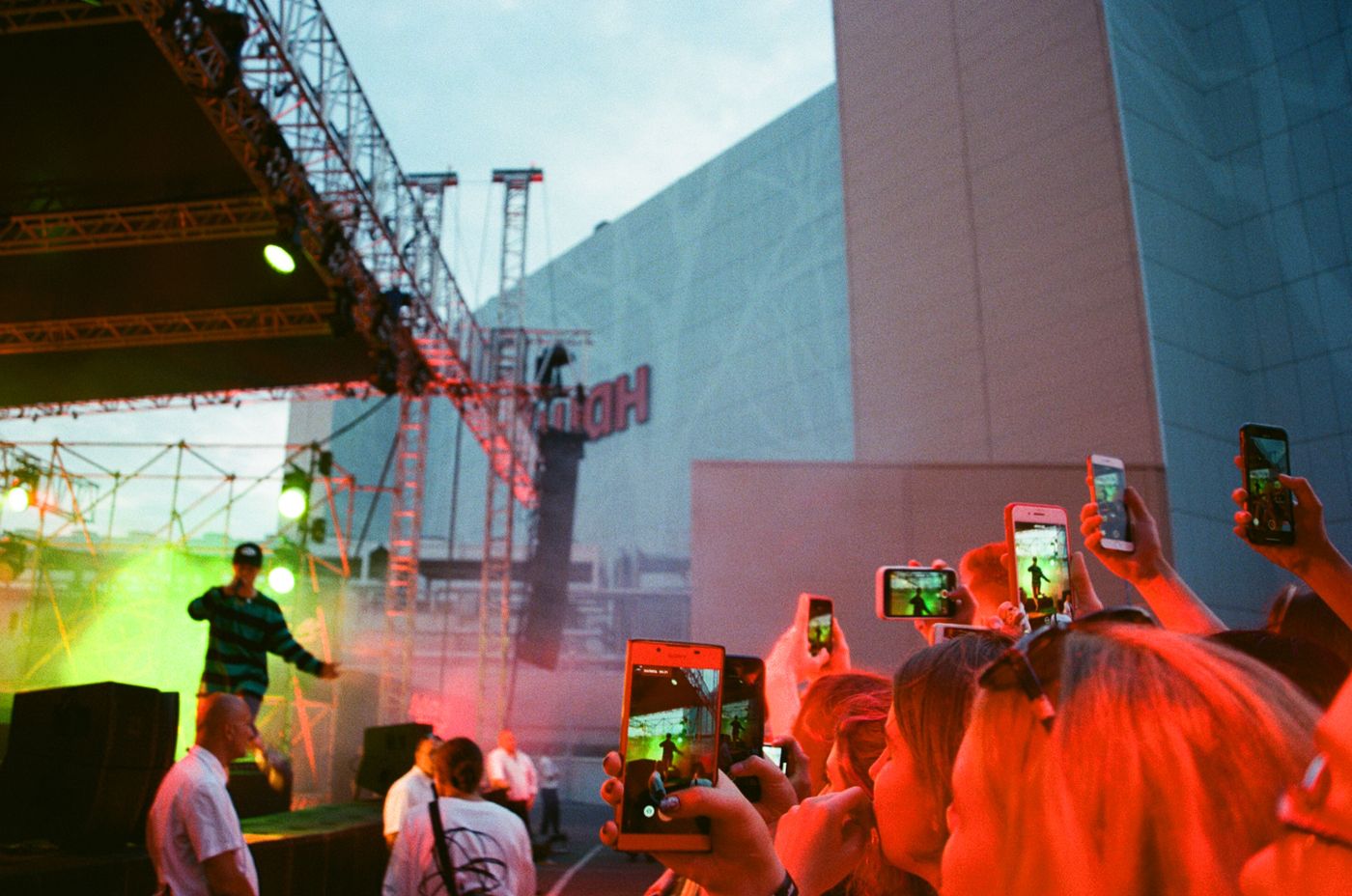
If you never watch the videos you take, you are not lazy and the videos are not worthless. Filming does its main job while you are filming: it pulls you into the moment. Rewatching is a separate activity with a real cost in time, and the camera roll never gives you a reason, an occasion or a length. The fault is in the format, not in you.
Key takeaways
- Recording is mostly for the present. In 2016, a nine-experiment study found taking photos raised enjoyment by increasing engagement in the moment.
- Rewatching video costs real minutes, and a camera roll never tells you which minutes are worth it.
- People underestimate how much they will enjoy rediscovering ordinary moments later (Psychological Science, 2014).
- The fix is a format with selection, a length and a shared screen, not filming less.
I built an app around this problem, so read what follows with that in mind. I will say where the research ends and my opinion starts.
Why do you film things you never watch again?
You film because filming changes the moment you are in, not because you plan to watch it later. In 2016, the Journal of Personality and Social Psychology published nine experiments with more than 2,000 people showing that taking photos usually made positive experiences more enjoyable, by making people more engaged (ScienceDaily, summary of Diehl, Zauberman and Barasch).
That study was about photos, not video, so take the transfer with care. But the mechanism is easy to recognise. When you hold up the phone at a school play, you are paying attention to your kid in a particular way: framing, waiting, hoping they look up. The act of recording is part of how you experienced the evening.
Seen that way, the clip has already earned its keep. The fact that it then sits unwatched for six years does not mean filming was a mistake. It means the second half of the job, getting it watched, has no system behind it.
There is a less flattering side too. In a 2014 study, people who photographed whole objects on a museum tour later remembered fewer of them, and fewer details, than people who only looked. Henkel called it the "photo-taking-impairment effect" (Psychological Science, Henkel 2014). Zooming in on a detail made the effect disappear. One reading: a camera can work as a note to yourself that says "the phone has this, I don't need to".
Put the two studies together and you get an odd picture. Recording can make the moment better while also handing the memory of it to the phone. If the phone then never gives it back, you have lost something real.
What does it actually cost to rewatch a video?
Rewatching a video costs exactly as long as the video, plus the time spent finding it. That sounds obvious, but it is the core difference from photos. You can flick through fifty photos in a minute and get something from each. Fifty videos at forty seconds each is over half an hour, with no way to skim.
Now add the decision cost. Opening the camera roll on a Sunday evening means choosing, from thousands of near-identical grey thumbnails, which clip is worth three minutes of your life right now. Most people do not reach that decision. They open the app, scroll for a bit, and close it. I covered the structural reasons in the guide to what to do with thousands of videos on your phone: no thumbnail you can judge, endless near-duplicates, and a screen built for one person.
Here is the part I think gets missed. Everything else we watch for pleasure comes with the decision already made. A film has a running time. An episode has a start, a middle and an end, and someone else picked what went in. Even a social feed decides for you what comes next. Your own footage is the only video in your life that arrives completely unedited, with no length and no order beyond the date.
So the real comparison is not "my kid's birthday versus nothing". It is "an unknown chunk of raw footage I have to choose myself" versus "a finished thing someone made for me". The finished thing wins nearly every time, even when the raw footage matters far more to you.
Are the videos you never watch actually worth keeping?
Yes, and more than you probably expect. In 2014, researchers at Harvard Business School asked 135 students to fill a time capsule with ordinary details: their last social event, a recent conversation, the songs they were listening to. Three months later the students opened the capsules, and they found them far more interesting than they had predicted (Association for Psychological Science, press release).
The gap was biggest for mundane moments. In one follow-up, people underestimated how much they would enjoy reading about a typical day with their partner, but predicted their enjoyment of a Valentine's Day fairly well. The lead author, Ting Zhang, summed it up: "What is ordinary now actually becomes more extraordinary in the future."
The same research suggests why we under-record and under-revisit: people overestimate how well they will remember everyday events. If you are sure you will remember the way your daughter said "hostipal" at three, you see no reason to watch the clip. Then one day you cannot remember it at all.
This matters for camera rolls. The video of a birthday cake is not what you will treasure. The forty seconds of an ordinary Tuesday breakfast, with the kitchen you no longer live in and a voice that has since changed, often is. Those are exactly the clips you would delete in a tidy-up because they "aren't of anything". If you prune, prune the junk, not the ordinary. The hour-long way to organise iPhone videos is built around that rule.
What does the camera roll get wrong as a format?
The camera roll is a storage format pretending to be a viewing format. It keeps everything, in the order it was shot, at its original length, on a screen for one. That is ideal for not losing things and poor for watching them. Apple's own answer inside Photos is Memories, which builds short films with music from a day, a trip or an album, and lets you change the mood and length (Apple Support: View memories on iPhone).
From building and testing my own app, I think four things turn raw footage into something a family actually sits down to watch. This is opinion, not a study, so treat it as a checklist to try rather than a finding.
Selection somebody else did
The hardest part of rewatching is choosing. Anything that removes the choosing, whether it is a partner who picks ten clips, Apple's Memories, or an app, makes watching dramatically more likely. You should still be able to fix the choices, but you should not have to start them.
A known length
"Twelve minutes" is a decision you can make on a weeknight. "Some of 2023" is not. Every format people return to has a length you can see before you press play.
A shared screen
Home video used to be a group activity because the VCR was in the living room. Watching on a television changes who watches. AirPlay sends a video from Photos to an Apple TV or AirPlay-compatible TV on the same Wi-Fi (Apple Support: Use AirPlay), and the guide to watching iPhone videos on the TV covers the cable and Chromecast routes too.
An occasion
People rewatch at birthdays, at the end of the year, when grandparents visit. Tie the watching to one of those, and it happens. Leave it to "some evening", and it does not.
What I did about it, and where it falls short
I built Tapeflix to supply those four things without asking you to edit. It goes through your iPhone camera roll, picks out the days worth keeping, and cuts them into short episodes with music and a VHS-style date stamp. It groups faces on the phone so you can name the people. You press play, and AirPlay puts it on the TV.
The limits, plainly:
- It is iPhone-only. There is no Android version.
- Face matching is weaker on young children. On-device matching separates adults well, but babies and toddlers can overlap, so expect to correct names.
- Footage leaves the phone to be made into episodes. Faces are grouped on the device; the rest is processed on our servers. The privacy policy explains what is kept and how to delete it.
- Free is small. The free tier makes one episode from about ten minutes of footage.
If none of that suits you, the free routes work too. Ask Photos for a Memory of last summer, or pick ten clips into a shared album and put it on the TV on someone's birthday. The format matters more than the tool.
The point is not to film less
The usual advice for unwatched videos is to record less and live in the moment. The research does not support that as a blanket rule. Recording can deepen the moment, and ordinary clips gain value with time. What fails is everything after you press stop.
So keep filming the ordinary days. Then give some of that footage a shape you would choose on a Sunday evening: selected, with a length, on a shared screen, at an occasion. Start with one small step this week, such as one Memory or one ten-clip album, and see whether anyone says "I'd forgotten that".
FAQ
Why do I never watch the videos I take?
Because rewatching video costs real time and a camera roll gives you no selection, no length and no occasion. Filming already did part of its job by making you more engaged in the moment, which a 2016 study of over 2,000 people linked to greater enjoyment. Watching later needs its own format.
Is it bad to film everything instead of being in the moment?
Not as a rule. A 2016 set of nine experiments found that taking photos usually increased enjoyment of positive experiences. A 2014 museum study found photographing whole objects could weaken memory of them, while zooming in on details did not. Filming with attention seems fine; filming on autopilot is where you lose something.
Should I delete the boring everyday videos?
Usually not. A 2014 time-capsule study found people underestimate how much they will enjoy rediscovering ordinary moments, more than special occasions. Delete accidental recordings, pocket videos and duplicates. Keep the dull breakfast clip; it is likely the one you will value most in ten years.
How can I get my family to actually watch our home videos?
Give the videos a format: someone else picks the clips, the result has a known length, it plays on the TV, and you watch it at a set occasion such as a birthday. Apple's Memories, a ten-clip shared album or an app like Tapeflix can each supply the selection; AirPlay handles the TV.